Acrylic Signs and LED Light Boxes: Clean Glow, Replaceable Graphics
Key takeaways
- Acrylic letters glow evenly and weigh less than metal-faced alternatives, which simplifies installation.
- A light box uses the same acrylic but keeps the frame: the graphic is replaceable without rebuilding the sign.
- Face thickness and diffusion control how uniform the glow looks — thin faces show hot spots behind the LEDs.
- A wall sign or name sign can be printed acrylic, layered acrylic or cut acrylic letters: three very different products.
Acrylic is the material most signage is judged by, because it is what the viewer actually looks at. It is also where the widest range of constructions exists under one name — from a printed panel on a wall to a fully illuminated 3D letter. This guide separates the options we build most often and explains which one solves which problem.
Related reading: custom acrylic channel letters · LED light box signs with replaceable panels · illuminated acrylic letters and mini signs · wall-mounted LED light box signs
Acrylic letters: the cleanest glow in signage
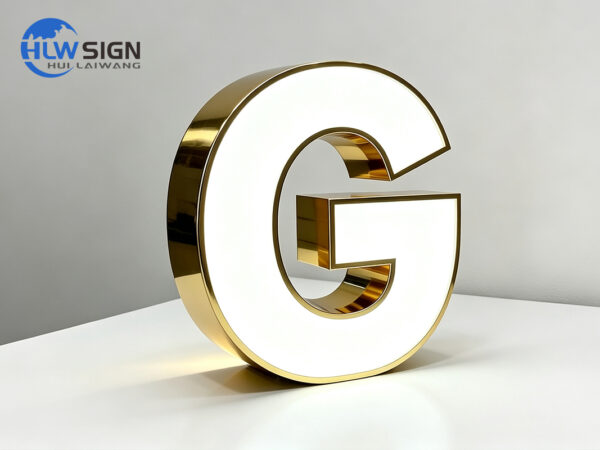
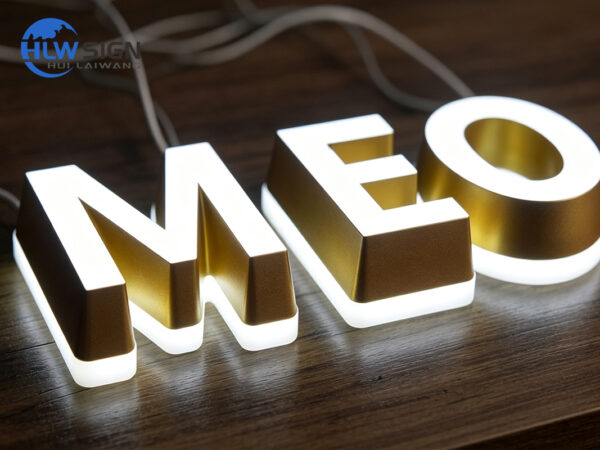
Cut acrylic letters sit on top of a metal return (an illuminated channel letter) or are mounted directly to the wall as a flat or layered sign. Because the face is a single continuous material with no seams, the light spreads across it without visible interruption, which is why acrylic reads as cleaner than metal-faced letters when a sign is viewed up close.
- High-transmittance acrylic delivers a brighter, more uniform face for the same LED output
- Matte, light-diffusing, transparent and UV-printed finishes are all available
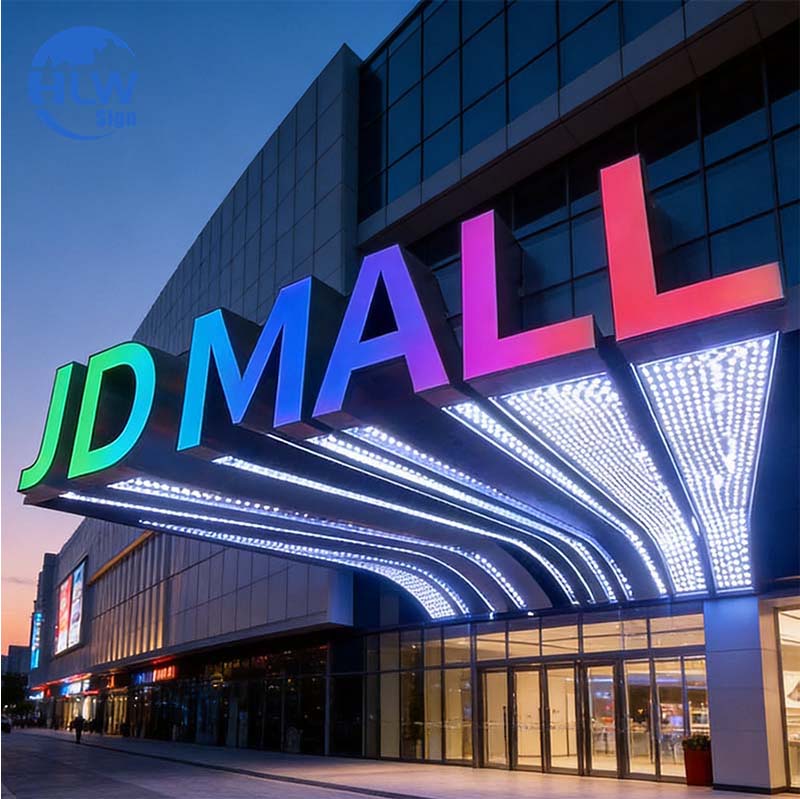
- Trimless constructions hide the frame so the letter appears to be pure glowing acrylic
- Lighter weight than metal-faced letters, which reduces the load on the façade and simplifies fixing
The usual specification is a 3–5 mm acrylic face on a stainless steel, galvanised or aluminium return for front-lit work, and 12–20 mm acrylic where a deeper, more diffused glow is wanted for RGB or effect lighting.
LED light boxes: when the graphic has to change
A light box keeps the frame and the illumination, and treats the face as a consumable. That single difference is why light boxes are the standard choice for anything that gets updated: menus, promotions, seasonal offers, shopfront panels, mall directories and beauty salon displays.
- Slim single-sided and double-sided constructions
- Replaceable acrylic or polycarbonate lens — the frame and wiring stay in place
- Edge-lit or backlit LED modules, depending on the depth and the uniformity required
- Suitable for interior walls and exterior façades with the right sealing and rating
When a client asks whether they need letters or a light box, the honest test is this: will the artwork change in the next five years? If yes, a light box. If no, letters will usually look better for the same budget.
Wall signs, name signs and printed acrylic
- Printed acrylic wall signs — artwork UV-printed onto a rigid acrylic panel, stand-off mounted for depth
- Layered acrylic signs — two or more colours laminated to create a raised, tactile graphic
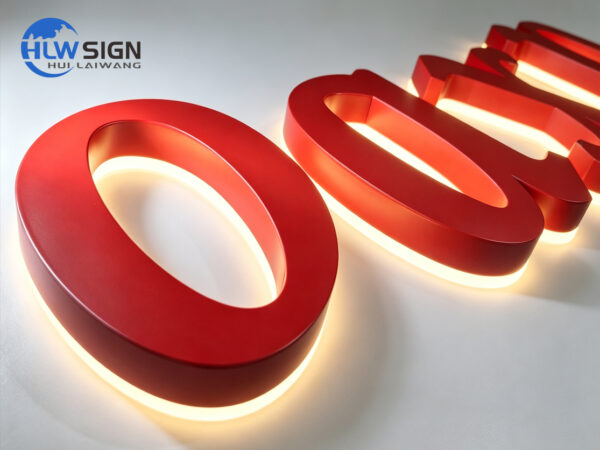
- Cut acrylic letters — individual letters mounted directly to the wall, illuminated or not
- Acrylic name signs — office doors, reception desks, meeting rooms and desk plates
- Acrylic light-up signs combined with a metal frame, where the graphic needs a hard edge
All four are made from the same material but produced on different equipment: printing, laminating, cutting and forming. Tell us the effect you want — flush, raised, glowing, replaceable — and we will route the job to the right construction rather than quoting the one we happen to make most.
Getting the illumination even
The most common complaint about acrylic signs is not brightness but uniformity: hot spots directly in front of each LED module, and dull areas between them. Three things control this.
- Module spacing and density, laid out per shape rather than per square metre
- Face thickness and diffusion: the thicker and more diffusing the acrylic, the smoother the face, and the more output is needed
- Return depth: shallow letters have less room for the light to spread before it hits the face
Every illuminated sign we make runs a continuous 24-hour lighting test before packing, and we send photos or videos of the finished sign for approval, so uniformity is judged on the real object rather than a render.
Conclusion
Use acrylic letters when the sign is a permanent brand statement and you want the cleanest possible glow. Use an LED light box when the graphic is content that will change. Use printed or layered acrylic when the sign should read as a surface rather than an object. All three are acrylic — and choosing the right one is decided by how long the artwork has to last.
Frequently asked questions
How much does an LED light box sign cost?
It depends on the size, the frame construction, whether it is single or double sided, and how the panel is illuminated. Because the face can be replaced later, many customers treat the frame as a long-term asset with cheap updates — send the dimensions for a factory-direct quote.
What is the difference between an edge-lit and a backlit light box?
Edge-lit boxes are thinner and light the panel from the sides, which suits shallow installations. Backlit boxes place the modules behind the face and give a more uniform result on deeper cabinets and larger panels.
Can the graphics in a light box be replaced without replacing the sign?
Yes. That is the point of the construction: the frame, wiring and LED modules stay in place and only the acrylic or polycarbonate lens is swapped, so promotional artwork can be updated without rebuilding the sign.
Is acrylic suitable for outdoor signage?
Yes, when it is specified correctly. The LED components carry IP65–IP68 ratings, the operation range is −20 °C to +50 °C for the standard build, and acrylic itself is UV-stable. Tell us the exposure and we will confirm the face and sealing specification.
How do I avoid hot spots in an illuminated acrylic face?
Face thickness, diffusion grade, LED spacing and return depth all contribute. We lay out modules per letter shape rather than per square metre and check the result with a 24-hour lighting test before shipment.
Sources and further reading
- Poly(methyl methacrylate) — Wikipedia — The acrylic used for sign faces.
- Polycarbonate — Wikipedia — The tougher alternative used for some lenses.
- Lightbox — Wikipedia — How illuminated panels are constructed.
- IP code — Wikipedia — Weatherproofing ratings for outdoor light boxes.
External links above point to independent reference material. We are not responsible for the content of external sites.