Which Sign Is Best for Your Type of Business? Retail, Food, Fitness and Clinics
Key takeaways
- Match the sign to how people arrive: on foot, in a car, or looking for a specific address.
- Food and hospitality read best warm; clinics and gyms read best clean and cool.
- Retail and forecourt businesses need distance legibility and evening impact.
- Almost every business needs two signs: one for the street and one for the entrance.
There is no single best sign, only a best sign for the way a business is found. A cafe in a pedestrian lane, a gym on a dual carriageway and a dental clinic in an office building are read in completely different conditions. Here is how we advise each of the most common business types.
Related reading: storefront and shop sign ideas · neon signs for salons, spas and bars · custom signage products by category · ask which sign suits your business
Retail, convenience and liquor stores
These businesses are found by passing traffic, so distance legibility and evening presence decide the sign.
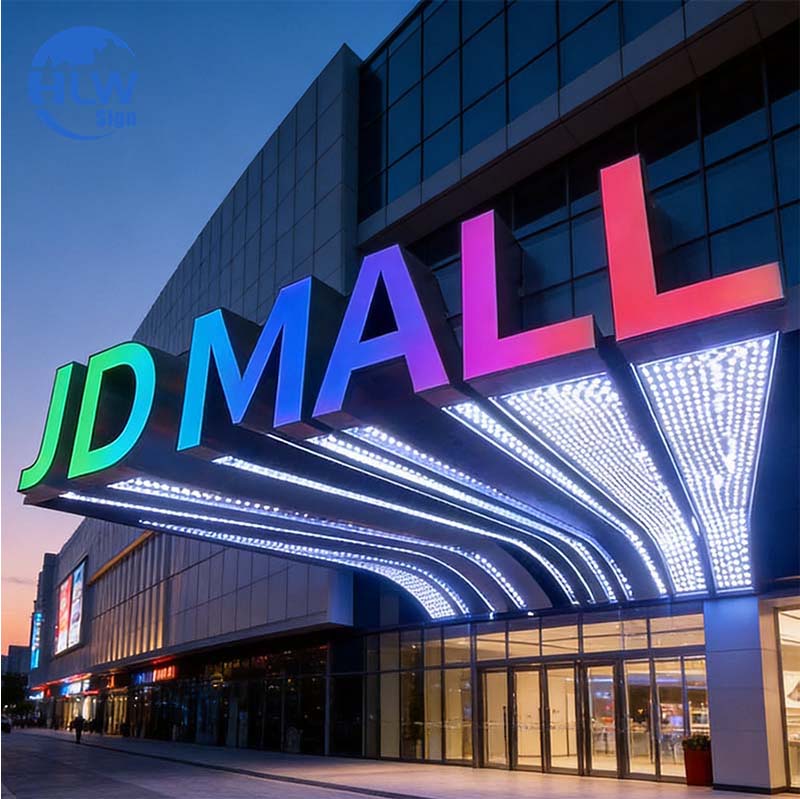
- Front-lit channel letters at 40 cm and above, or an illuminated light box for changeable promotions
- Warm-to-neutral colour temperature, 4,000–6,500 K, so the shop reads as open and bright
- A window sign or light box for opening hours, offers and price points
- Avoid mirror finishes: they can disappear in daylight at an angle
Cafes, restaurants and bars
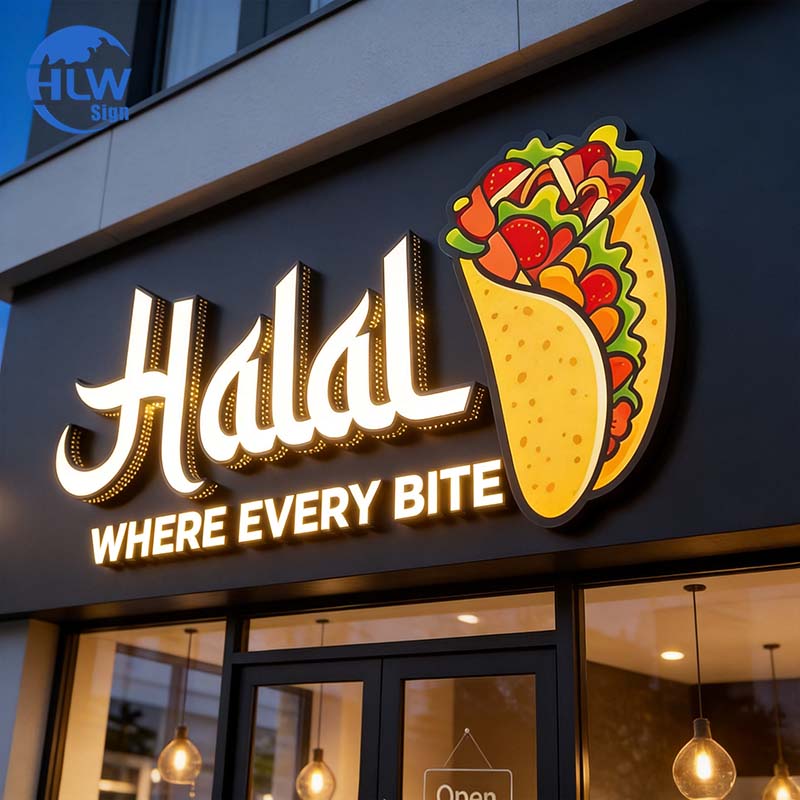
- Warm white 3,000 K, which flatters both the brand and the food
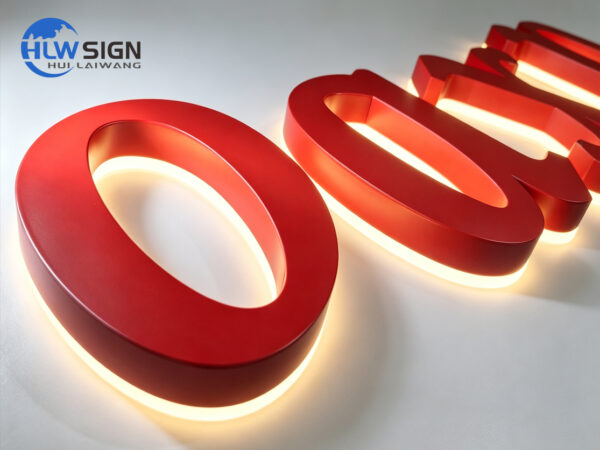
- Halo letters or a backlit logo for an evening character that does not glare
- Neon or LED neon as a second sign inside the window, where it sets the tone
- Menu boards and light boxes that can be updated with the seasons
Gyms, clinics, salons and offices
| Business | Recommended sign | Why |
|---|---|---|
| Gym / fitness studio | Large front-lit letters or a light box, 6,500 K | Seen from the road and after dark; needs energy and clarity |
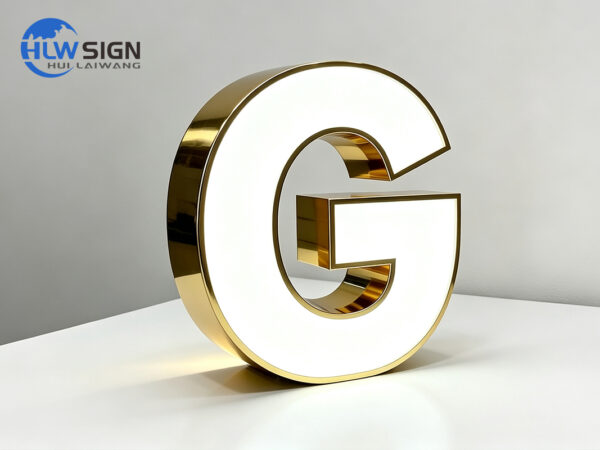
| Clinic / dental | Non-illuminated or discreet backlit 3D letters, 4,000 K | Calm, professional, easy to keep clean |
| Salon / spa / nail studio | Warm halo letters plus interior neon | Photographed constantly; warmth sells the experience |
| Office / professional services | Reception logo plus door plates | Found by address, judged at close range |
| Hotel / hospitality | Backlit letters with a pylon sign | Two audiences: walking guests and drivers |
Tell us how customers arrive and what they see first. We will recommend a construction, a colour temperature and a size, and quote it factory-direct from one sign to a multi-site rollout.
The mistake most businesses make
- One sign doing two jobs: a fascia sign cannot also explain what you sell
- Sizing for the logo rather than for the viewing distance
- Matching the neighbours instead of standing out from them
- Ignoring the entrance, where customers actually decide to come in
Conclusion
Choose the sign from the way customers arrive and the time of day they arrive. Retail and fitness need distance legibility; food, beauty and clinics need warmth and detail; offices need a reception sign people stand next to. Then add a second sign at the entrance, because that is where the decision is made.
Frequently asked questions
What is the best sign for a small shop on a side street?
A projecting sign plus a well-lit fascia sign. The projecting sign is what pedestrians see while walking along the pavement, which matters more than distance legibility on a quiet street.
Should a clinic or dentist use an illuminated sign?
A discreet backlit logo or non-illuminated 3D letters usually suit a clinic better than a bright front-lit face. If the practice is open after dark, a low-brightness halo build keeps it visible without looking commercial.
Can one sign design work across several locations?
Yes, and it should. A consistent construction, colour temperature and fixing method makes multi-site rollouts cheaper and recognisable, and we keep the specification on file so repeat sites match the first one.
Sources and further reading
- Storefront — Wikipedia — Retail presentation context.
- Signage — Wikipedia — Overview of signage types and roles.
- Color temperature — Wikipedia — How warm and cool lighting reads in a space.
- Wayfinding — Wikipedia — How customers navigate to a business.
External links above point to independent reference material. We are not responsible for the content of external sites.