Church and Cross Signs: Illuminated and Non-Illuminated Options
Key takeaways
- Non-illuminated metal lettering and plaques are the default for heritage buildings.
- Where illumination is allowed, discreet halo lighting respects the architecture better than a bright face.
- Cross signs can be fabricated in stainless steel, aluminium or bronze-effect finishes.
- Mounting on a reversible rail avoids drilling historic masonry.
Signage for a church, chapel or religious institution carries a different brief from commercial work: it must be legible and welcoming, respectful of the building, and often removable without trace. We build cross signs, lettering and notice boards for exactly those constraints.
Related reading: non-illuminated metal lettering and plaques · reverse channel letters and halo lighting · sign permits for heritage buildings · discuss a church signage project
Cross signs and how they are made
- Fabricated in stainless steel, aluminium or galvanised sheet with an anti-corrosion treatment
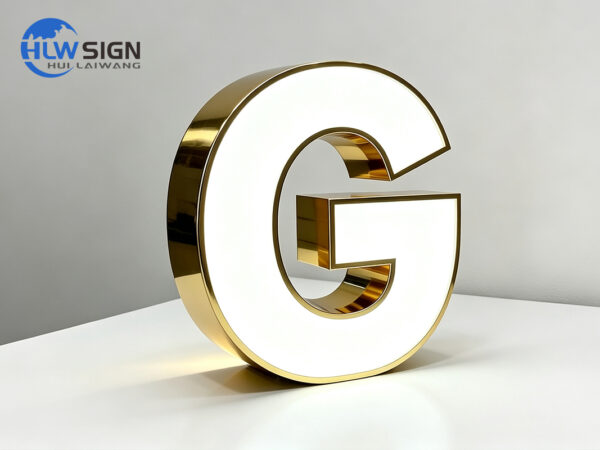
- Finishes: brushed or mirror stainless, spray painted to any PANTONE or RAL reference, or electroplated gold and antique bronze
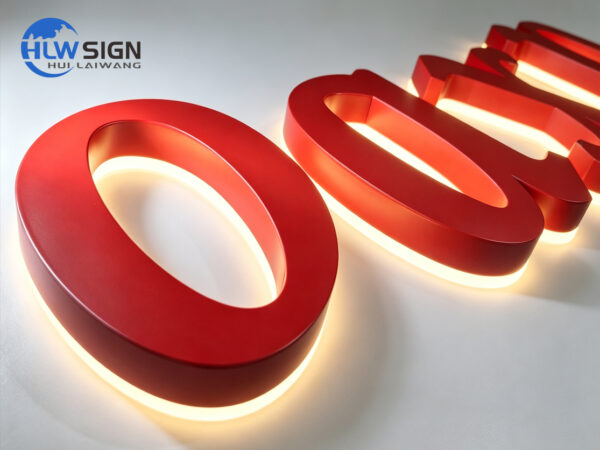
- Halo (backlit) illumination where the cross should glow without glare
- Front-lit versions where the cross has to be read from a distance
- Sizes from a small interior cross to a facade installation viewed from the road
Lettering, plaques and notice boards
| Sign | Construction | Best for |
|---|---|---|
| Church name lettering | Non-illuminated or halo 3D letters | Facades and entrance porches |
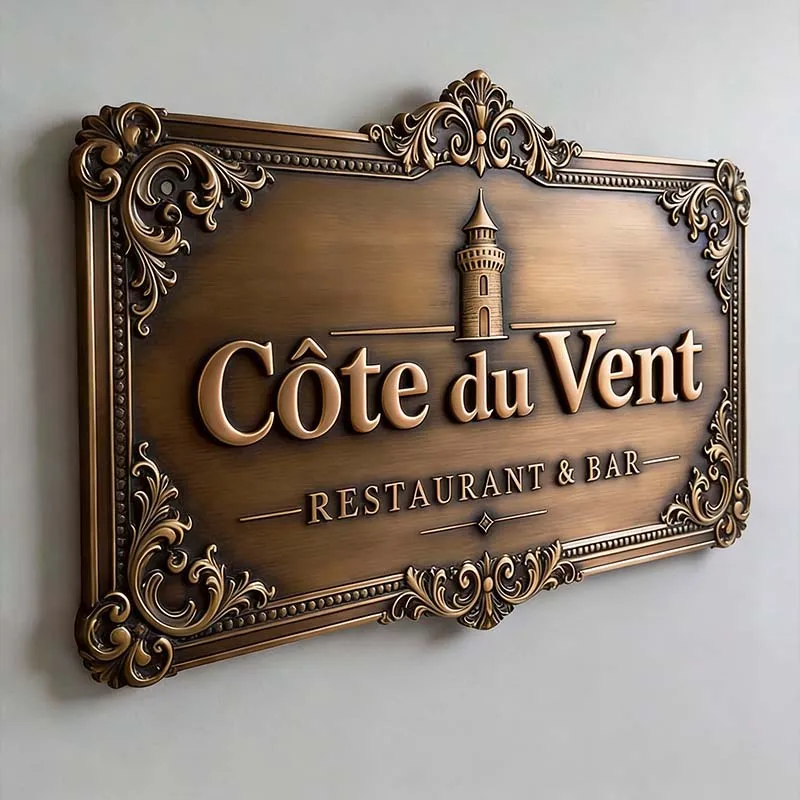
| Commemorative plaque | Cast or relief metal panel, bronze or copper effect | Interiors, memorials, dedications |
| Notice board | Metal frame with a lockable glazed panel | Service times, community notices |
| Interior signage | Acrylic or brushed stainless plates | Halls, offices, meeting rooms |
| Directional sign | Non-illuminated panel on posts | Car parks, cemeteries, entrances |
Fixing on old buildings
- Mount on a rail or sub-frame where the masonry should not be drilled
- Use concealed studs and a drilling template where fixings are permitted, so holes are exact
- Choose a finish that ages gracefully: brushed stainless and bronze effects weather better than mirror finishes
- Keep illumination low and warm — 3,000 K halo lighting reads as respectful rather than commercial
- Ask for a reversible installation, so the sign can be removed without leaving damage
Send photographs of the building and the mounting surface, plus the wording and approximate size. We will propose a construction and a fixing method that suits the age and material of the building.
Conclusion
Church signage is a material and mounting decision before it is a design decision. Fabricate in a finish that ages well, keep any illumination warm and low, and fix it in a way that could be undone. Done that way, the sign reads as part of the building rather than an addition to it.
Frequently asked questions
Can a cross sign be illuminated?
Yes — halo (backlit) crosses are the usual choice, because the glow washes the wall instead of shining outwards. Where illumination is restricted, non-illuminated stainless steel or bronze-effect crosses are the alternative.
What material is best for a heritage church sign?
Brushed stainless steel, aluminium with a painted finish, or bronze and copper-effect relief plaques. All three age gracefully and can be mounted on a rail so historic masonry is left undrilled.
Can you make a notice board with a lockable front?
Yes. We build metal-framed boards with a glazed, lockable front for service times and community notices, in finishes that match the rest of the church signage.
Sources and further reading
- Christian cross — Wikipedia — Symbol context for cross signage.
- Listed building — Wikipedia — Heritage constraints on fixing signage.
- Electroplating — Wikipedia — How bronze, gold and antique finishes are applied.
- Signage — Wikipedia — General signage construction background.
External links above point to independent reference material. We are not responsible for the content of external sites.