LED Colour Temperature for Signage: 3000K vs 4000K vs 6500K vs 10000K
Key takeaways
- 3,000 K reads warm and hospitable, 4,000 K neutral, 6,500 K crisp, 10,000 K cold and decorative.
- The face material shifts the tone: acrylic tints and painted returns change what the eye sees.
- Keep one colour temperature across the whole sign — mismatched modules are visible on a wall.
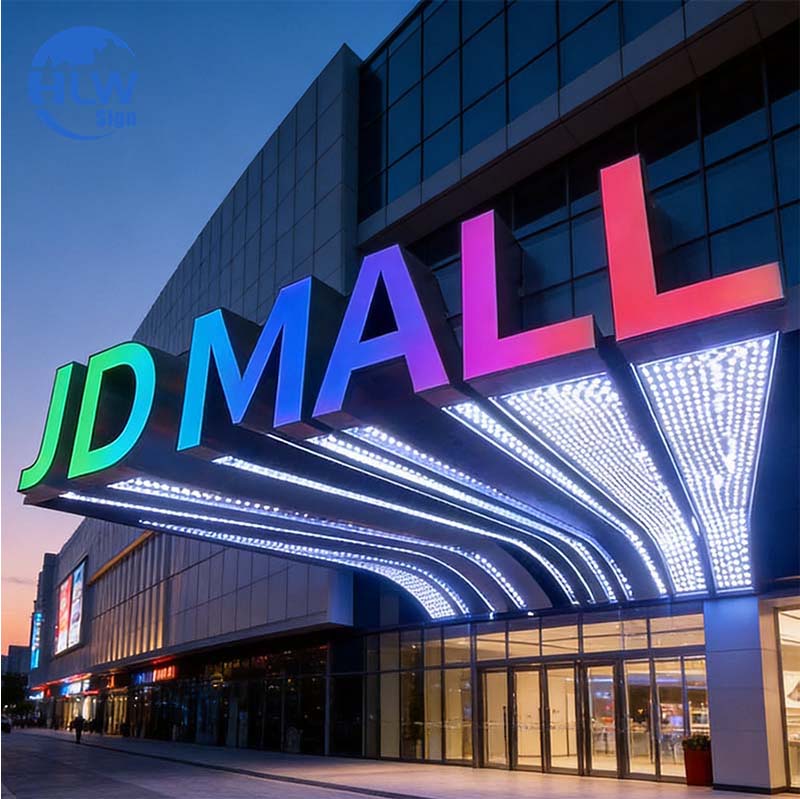
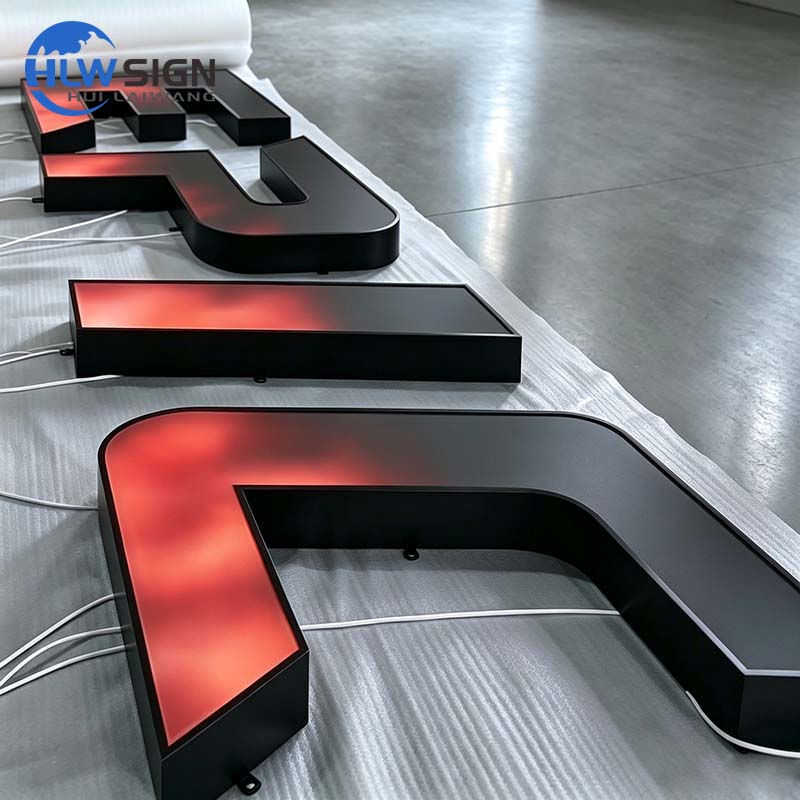
- RGB is a separate decision from colour temperature: use it when the sign must change.
Colour temperature is the least discussed and most visible decision in illuminated signage. It decides whether a restaurant entrance looks welcoming or clinical, and whether two signs on the same street look like siblings or strangers. Here is how the options actually behave.
Related reading: RGB colour-changing channel letters · dynamic effect custom RGB sign · backlit signs and halo letters design guide · ask about colour matching
What the numbers mean
| Colour temperature | Impression | Typical use |
|---|---|---|
| 3,000 K | Warm white, welcoming | Restaurants, hotels, salons, beauty clinics |
| 4,000 K | Neutral, balanced | Offices, showrooms, general retail |
| 6,500 K | Crisp, cool | Clinics, gyms, modern retail, petrol forecourts |
| 10,000 K | Cold, almost blue-white | Decorative and effect-led signage |
| RGB / RGBW | Any colour, or true white | Bars, venues, seasonal and event signage |
Kelvin describes the character of white light, not its brightness or quality. A sign is not brighter because the number is higher.
How the sign changes the light
- Acrylic face: a tinted face shifts the perceived tone, and a matte diffuser spreads it more softly
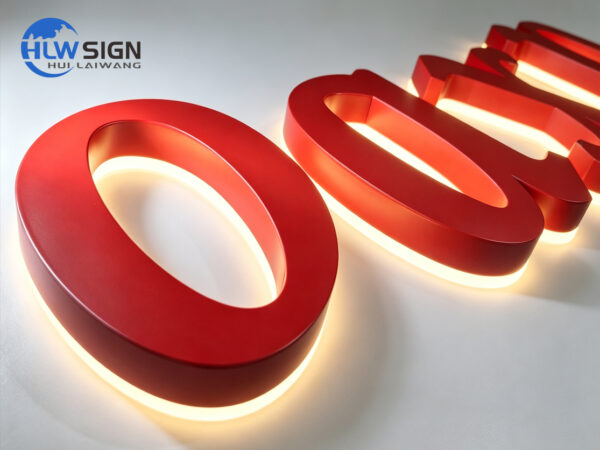
- Return colour: a warm metal return makes a neutral white feel warmer
- Wall colour: under a halo build, the wall is part of the colour — warm stone softens, grey cools
- Ambient light: a 3,000 K sign next to a cool street lamp reads cooler than it does alone
- Daylight view: the face colour dominates by day, the LED dominates at night
Consistency is the rule that matters most
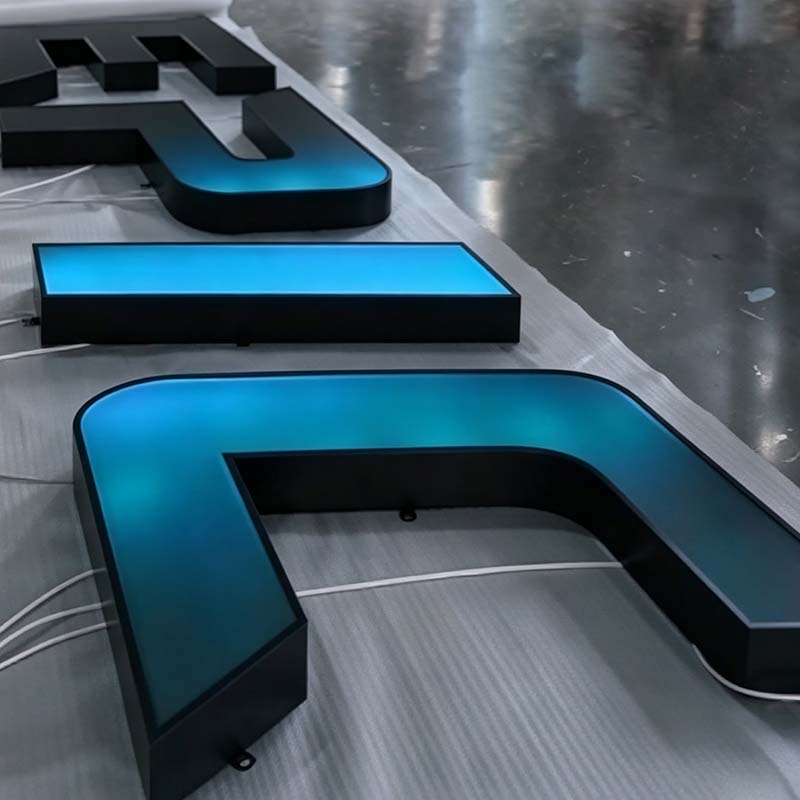
On one sign, a difference of a few hundred Kelvin between letters is obvious — especially on a wall-lit (halo) build, because the light travels before it reaches the eye. That is why module batches matter.
- Fix one colour temperature for the whole sign and keep it in the specification
- Reserve modules from one batch for larger orders, so every letter matches
- Use RGBW rather than RGB when a clean white is also needed
- Run a continuous 24-hour lighting test before packing and approve from a photo or video
Tell us the mood you want and what the wall is made of. We will recommend a colour temperature, LED density and face material — and send a photo of the finished sign for approval before it ships.
Conclusion
Choose the colour temperature from the mood of the space, then check it against the face material and the wall. Keep it consistent across the sign, reserve modules from one batch, and decide separately whether the sign needs to change colour at all — RGB is an effect, not a temperature.
Frequently asked questions
What colour temperature is best for a shopfront sign?
4,000 K and 6,500 K are the usual choices for retail because they read as clean and bright. Hospitality businesses — restaurants, hotels, salons — usually look better at 3,000 K, which is warmer and more welcoming.
Why do my letters look different colours at night?
Either the modules come from different batches, or a driver channel is degrading. Colour temperature should be fixed for the whole sign and modules reserved from one batch; where a channel has failed, the driver is usually the fault.
Is RGB the same as colour temperature?
No. Colour temperature describes white light character in Kelvin; RGB describes hue and colour change. RGBW modules combine both, adding a dedicated white channel so the sign can still show a clean white.
Sources and further reading
- Color temperature — Wikipedia — What the Kelvin scale describes.
- LED lamp — Wikipedia — How LED modules produce white light.
- Solid-State Lighting programme — U.S. Department of Energy — Independent reference on LED colour quality.
- DMX512 — Wikipedia — The control protocol used for colour-changing signs.
External links above point to independent reference material. We are not responsible for the content of external sites.