Storefront and Shop Sign Ideas That Bring Foot Traffic
Key takeaways
- The most effective shop signs are legible from 20–30 metres, not merely attractive from the pavement.
- Illuminated letters or a light box usually pay for themselves in one season of evening trade.
- Match the sign to the fascia depth: shallow fascias favour light boxes, deep ones favour channel letters.
- Contrast beats colour: dark letters on a light wall, or light letters on a dark one, always read further.
A storefront sign is not decoration — it is the piece of equipment that tells a street who you are and whether you are open. We build signage for shops, salons, restaurants, clinics and showrooms every week, and the same handful of decisions separates signs that bring in trade from signs that merely fill the fascia. Here is what we advise when a customer asks "what should I put above my shop?"
Related reading: custom channel letters for shopfronts · illuminated light boxes with replaceable graphics · custom neon signs for shops and salons · non-illuminated signs for heritage shopfronts
Start with the viewing distance, not the design
Before choosing a construction, stand on the far side of the road and look at your shop. That distance sets the rules: letter height, stroke width, and whether the sign needs internal illumination to compete with the shopfronts beside it.
- Seen from under 10 metres (a market stall, an interior mall unit): small metal letters or a light box with fine detail work fine
- Seen from 10–30 metres (a typical high-street shop): letters of 20–40 cm with clear strokes
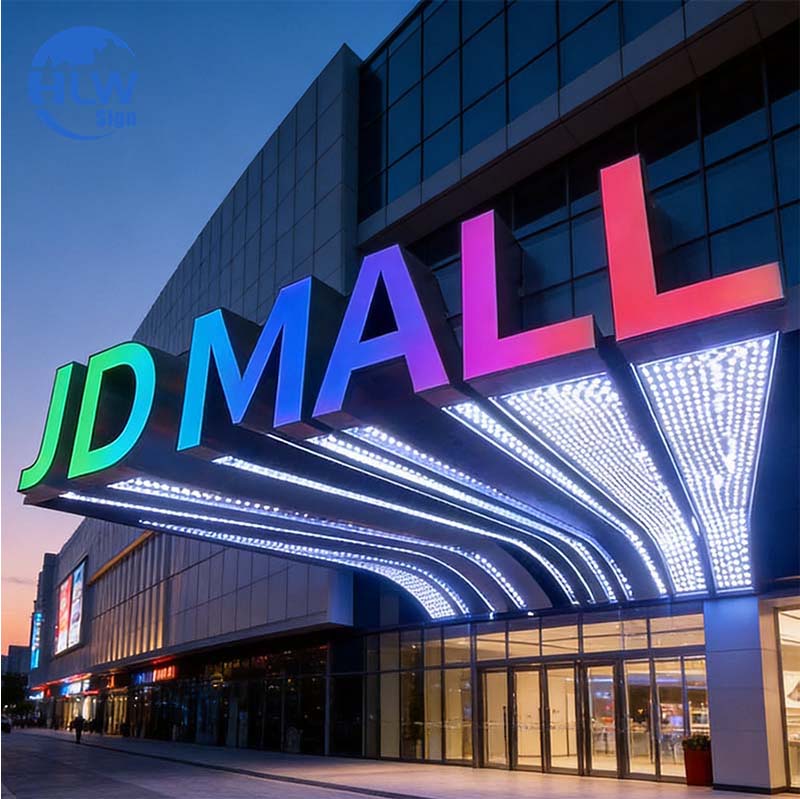
- Seen from 30–60 metres (a roadside unit, a big-box entrance): letters of 40 cm and above, front-lit for maximum legibility
- Seen at night from a moving vehicle: illumination is not optional, it is the difference between being found and being missed
Six storefront sign constructions and where they belong
1. Front-lit channel letters
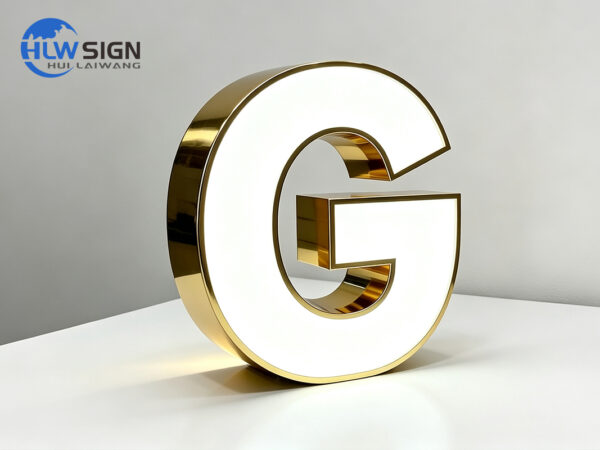
The default for retail. Bright, legible, and available in every colour and finish, from a plain brushed stainless return to gold electroplating. If your fascia can take the weight and the depth, this is usually the right answer.
2. Backlit or halo letters
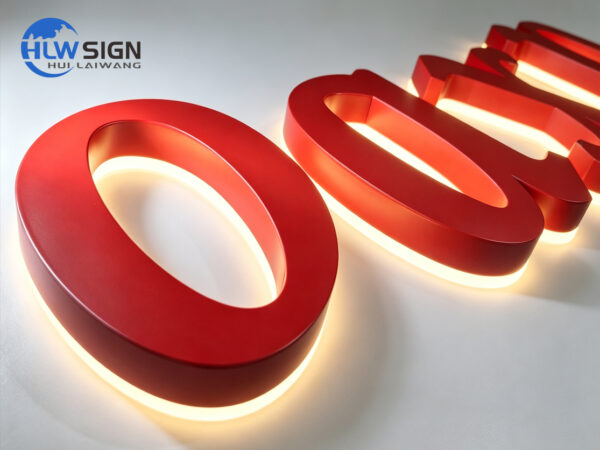
Better for boutiques, clinics and salons in streets that are already bright. The subtle halo reads as premium and stops your shopfront from looking like a discount outlet.
3. Light boxes with replaceable faces
The workhorse of shops that change their artwork — promotional panels, menus, seasonal offers. The frame stays, the printed or acrylic face is swapped. It is also the cheapest way to get a large, evenly lit surface.
4. Non-illuminated metal letters
For heritage streets, listed buildings and interiors where illumination is restricted or simply wrong. Spend the savings on a better finish instead.
5. Neon and LED neon
Salons, barbershops, coffee bars, studios: neon sets a tone that channel letters cannot. Best used as a second sign — a window or interior feature — rather than as the only identifier of the business.
6. Projecting and freestanding signs
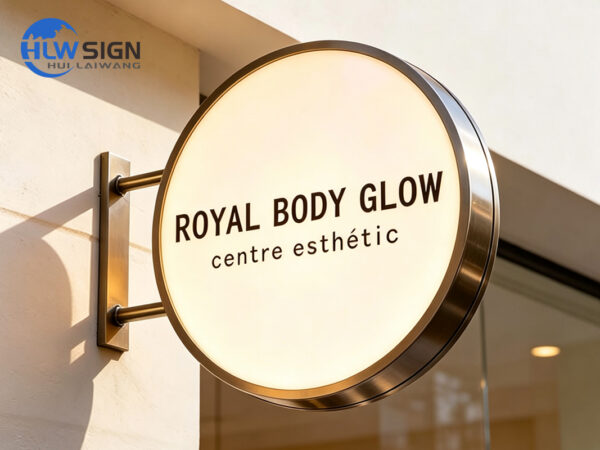
A projecting sign is what pedestrians see while walking along the pavement. If your shop sits in a row of shops with no side-on visibility, a projecting sign is often the single highest-return addition.
Details that decide whether the sign actually works
- Contrast: dark letters on a light fascia, or light letters on a dark one. Mid-tone on mid-tone is the most common mistake we see.
- Stroke width: serif and script fonts lose their thin strokes at distance; if the font is decorative, we increase the letter height rather than accept a soft image
- Depth of the letters: 30–40 mm reads as properly three-dimensional for a 20–40 cm letter
- Evenness of the glow: LED density is what makes a sign look factory-made rather than improvised
- Service access: leaving a route to the driver and wiring saves a scaffolding bill later
- Colour temperature: 3,000–4,500 K suits hospitality, 6,500 K suits retail and clinics that want a crisp look
What we need to quote a shop sign
- A photo of the shopfront taken from the far side of the road, with the fascia visible
- Approximate fascia width and height, and the letter height you have in mind (or ask us to recommend one)
- The fascia material and depth — plaster, timber, aluminium panel — so we can specify fixings
- Your logo in vector format if you have it
- Whether the sign is illuminated, and if there are restrictions from a landlord or council
MOQ is one piece, so a single shop sign is normal business for us. Most orders ship 7–15 working days after you approve the drawings.
Conclusion
The sign above a shop has one job: to be seen, read and remembered from the distance your customers actually pass at. Decide that distance first, choose the construction second, and spend the remaining budget on contrast, stroke width and evenness of light. That order of decisions produces signs that look better and sell more than a design chosen from a catalogue of styles.
Frequently asked questions
What size should a shop sign be to read from across the street?
As a rule of thumb, letter height of 20–40 cm works for a typical high-street shop seen from 10–30 metres, and 40 cm and above for roadside or large-format sites. Send a photo taken from the far side of the road and we will recommend a size.
Do I need permission for an illuminated shop sign?
Requirements vary by location and by landlord, and illuminated signage is usually regulated more tightly than non-illuminated. We supply drawings and specifications you can submit, and can suggest a non-illuminated construction if illumination is not permitted.
How much does a shop sign cost?
It depends on letter height, total width, construction and mounting. Because every sign is made to order we quote individually — send a photo of your shopfront with approximate sizes and we will reply with a factory-direct price within one business day.
Can you match my existing brand colours?
Yes. Custom spray painting follows your PANTONE or RAL reference, and metal parts are available in brushed or mirror stainless with electroplated finishes including titanium gold, champagne gold, rose gold, black steel and antique bronze.
Do you help with installation?
Each order includes installation drawings, wiring instructions, mounting templates and accessories. We also provide step-by-step installation videos and technical support so your local sign fitter can complete the work.
Sources and further reading
- Storefront — Wikipedia — Design context for shopfront presentation.
- Signage — Wikipedia — Overview of sign types and purposes.
- Wayfinding — Wikipedia — How signage guides people through a space.
- International Sign Association (ISA) — Signage industry guidance and standards.
External links above point to independent reference material. We are not responsible for the content of external sites.